
Purple nudibranch
Nudibranchs are sea slugs without a shell. This purple one is only a few centimetres long and easy to miss without a slow, careful search.
Squatina Diving
From tiny nudibranchs to octopus and scorpionfish: a glimpse of what lives underwater off Krk.
These photos come from our dives. What you see depends on the dive site, the season and a bit of luck, so no animal is guaranteed.
Nudibranchs are sea slugs without a shell. This purple one is only a few centimetres long and easy to miss without a slow, careful search.

Often found on red sponges, which it feeds on. Its white body with dark spots stands out against the bright background.

The finger-like growths on its back give it a feathery look. A favourite subject for macro photographers.

Bold yellow and blue stripes warn predators that it is not a good meal. Seen here on a yellow sponge.

Delicate and almost transparent, it glides over algae and hydroids. A moment of patience is rewarded.

A master of camouflage that changes colour and texture in seconds. Often tucked into rocky crevices and more active in the dark.

Striped in blue and orange, with long antennae. It usually stays in a crevice and shows only its face.

A perfect ambush predator that blends into the reef. Its spines are venomous: look, photograph, never touch.

Smaller but just as well camouflaged. Easy to miss until its eyes give it away.

A relative of starfish that spreads its feathery arms to catch food drifting by.

A tube-dwelling worm with a delicate crown of feathery tentacles. The crown snaps shut if you approach too fast.

A small, curious fish that peeks out of holes in the rock and often seems to look back at you.
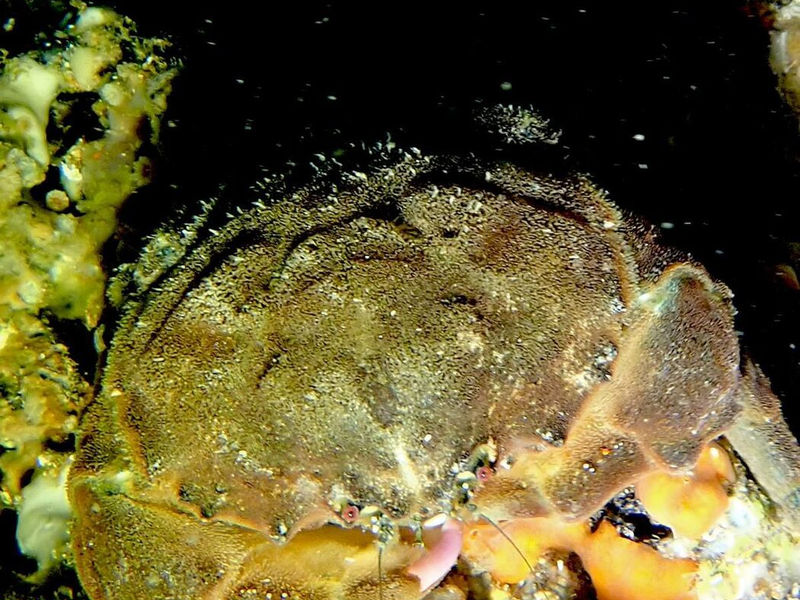
Slow and hairy, this crab camouflages itself with sponge or other material from the seabed.

Schools of sea breams are common around rocky reefs and often swim right past divers.
Start with Discover Scuba Diving or book a dive with us.
Book nowDiscover Scuba Diving